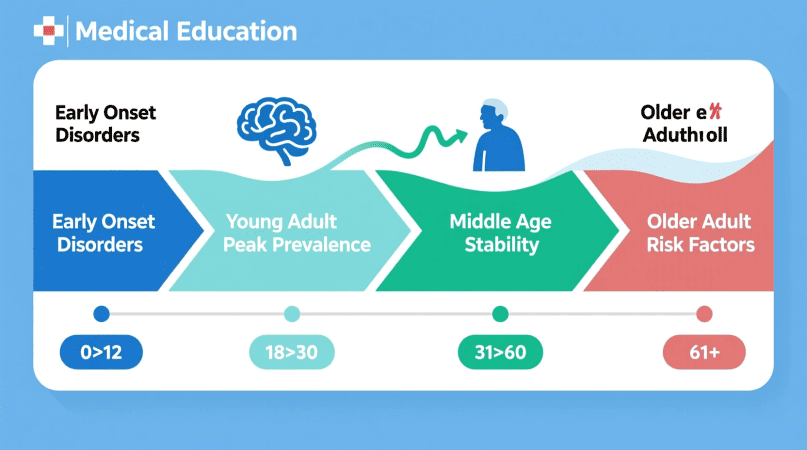
A common concern people ask is: “Does mental illness get worse with age?” The answer isn’t simple. Some conditions may intensify over time if untreated, while others remain stable or even improve with proper care and lifestyle changes. Understanding how aging interacts with mental health helps individuals and families prepare, seek support, and take preventive steps.
Take our Accurate mental age test to see how your mental and emotional balance shifts with age.
What Does “Worsening” Mean in Mental Illness?
When we ask if a mental illness worsens, we’re usually talking about:
- Severity: symptoms becoming stronger or more disabling.
- Frequency: episodes occurring more often or lasting longer.
- Functioning: difficulties with work, relationships, or independence.
- Overlap with physical health: aging brings new challenges that may interact with mental illness.
Do Mental Illnesses Typically Get Worse With Age?
Depression and Anxiety
- Older adults face higher risks due to chronic illness, bereavement, or isolation.
- However, many develop stronger coping strategies and may report improved resilience compared to younger adults.
Schizophrenia
- Some symptoms stabilize with age, especially if treatment is consistent.
- Cognitive decline and comorbid conditions may complicate long-term management.
Bipolar Disorder
- Manic and depressive episodes may lessen in frequency with treatment.
- Without treatment, cycles can remain disruptive and sometimes harder to manage in older age.
Personality Disorders
- Traits like impulsivity may reduce with age.
- But untreated personality disorders can continue to cause challenges throughout life.
Compare your results with your actual years in mental age vs chronological age.
Risk Factors That Can Make Symptoms Worse With Age
- Chronic medical conditions (diabetes, heart disease, mobility problems).
- Medication side effects or interactions.
- Social isolation and loneliness — a major predictor of poor mental health.
- Cognitive decline — aging brains may struggle with memory, concentration, or flexibility.
- Delayed treatment — untreated or undertreated illnesses often worsen over decades.
Read what age group has the highest rate of mental illness? to find out which age groups are most affected.
Protective Factors That Improve Mental Health With Age
The good news: many people manage or even improve their mental health in older adulthood. Protective factors include:
- Staying socially connected with family, friends, or community.
- Continuing therapy, counseling, or psychiatric care.
- Maintaining physical activity, good sleep, and nutrition.
- Keeping the brain active through hobbies, learning, and meaningful work.
What the Research Shows
- WHO highlights that over 20% of adults aged 60+ live with a mental or neurological disorder. Depression and dementia are most common, but many do not worsen if treated early.
- NIH studies show that mental illnesses in early life can accelerate physical aging, but intervention slows decline.
- Paradoxical trend: Some older adults report higher life satisfaction and stable or improved emotional health despite illness history.
Explore what age does mental illness start? to understand early indicators of mental health challenges.
FAQs About Aging and Mental Illness
1. Does depression get worse with age?
Not always. For some, it increases with life stressors, but others develop better coping mechanisms.
2. Can anxiety get worse in older adulthood?
Yes, especially with health concerns, but therapy and lifestyle support can reduce severity.
3. Does schizophrenia always worsen with age?
No. Many stabilize with consistent treatment, though cognitive challenges may grow.
4. Can mental illness improve as people get older?
Yes. Traits like impulsivity may reduce, and some find greater emotional balance.
5. What can I do to prevent worsening mental health as I age?
Seek treatment early, stay socially engaged, and maintain a healthy lifestyle.
- How emotional development shifts over time is described in emotional maturity.
- You can compare trends across generations using what age group has the most mental health issues.
- Early and later-life patterns are discussed in what age does mental illness start.
- Differences between age groups are analyzed in what age group has the highest.
- The psychology behind long-term change is explained in psychology.
- Readers often reflect on their own outlook by taking the mental age test.