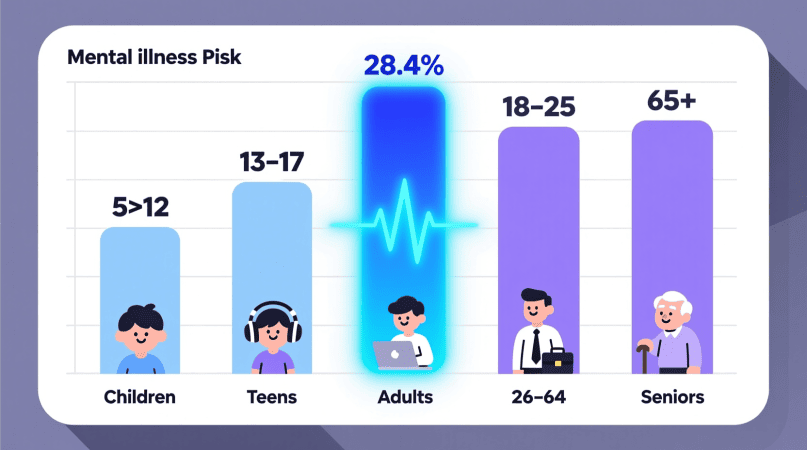
Mental illness affects people at every stage of life, but research shows young adults aged 18–25 have the highest rate of mental illness compared to other groups. This age range struggles the most with both common conditions like anxiety and depression, as well as serious mental illnesses.
Curious how your mindset compares across age groups? Try the free Mental Age Checker to explore your own mental perspective.
Mental Illness by Age Group
Adolescents (12–17)
- Nearly 1 in 2 teens will experience a mental health disorder before age 18.
- Anxiety, depression, ADHD, and eating disorders are most common.
- Many cases go untreated due to stigma or limited access to care.
Young Adults (18–25) – The Highest Rate
- This group has the highest prevalence of mental illness.
- About 1 in 3 young adults experiences a mental health condition each year.
- Serious mental illness (SMI) affects about 1 in 8, more than any other age group.
- College stress, career uncertainty, social pressures, and financial struggles add to the burden.
Adults (26–49)
- About 1 in 4 adults in this range experience mental illness yearly.
- Depression, stress-related conditions, and substance use are common.
Older Adults (50+)
- Rates decline in older populations, with about 14% reporting mental illness annually.
- Challenges include dementia, depression linked to health decline, and isolation.
Explore what age does mental illness start? to understand when mental health challenges typically appear.
Why 18–25 Year-Olds Are Most Affected
- Brain development – emotional regulation and impulse control continue maturing until the mid-20s.
- Life transitions – moving from school to work, building independence, and financial pressures all create stress.
- Social media influence – constant online comparison heightens anxiety and depression.
- Limited access to care – stigma, cost, and lack of services prevent many from seeking help.
Read does mental illness get worse with age? to see how conditions may evolve over time.
Quick Comparison by Age Group
| Age Group | Prevalence of Any Mental Illness | Serious Mental Illness | Common Disorders |
|---|---|---|---|
| Teens (12–17) | High (≈50% lifetime risk) | Moderate | Anxiety, depression, eating disorders |
| Young Adults (18–25) | Highest (≈33% yearly) | Highest (≈12%) | Depression, anxiety, bipolar disorder, substance use |
| Adults (26–49) | ~25% yearly | Lower | Depression, stress, substance abuse |
| Older Adults (50+) | ~14% yearly | Low | Dementia, depression, anxiety |
FAQs on Mental Illness by Age
1. Which age group has the highest rate of mental illness?
Young adults aged 18–25 have the highest rates of both mental illness and serious conditions.
2. Are teens or young adults more vulnerable?
Both groups face high risks, but prevalence and severity peak in young adults.
3. Do older adults have fewer mental health issues?
Yes, but depression, dementia, and anxiety remain significant. Underreporting may also lower official numbers.
4. Why are young adults most affected?
Life changes, financial stress, brain development, and social media all contribute.
5. Has this trend increased recently?
Yes. Data shows mental illness rates among 18–25 year-olds have risen significantly in the last decade.
Comparing emotional patterns across life stages is easier with our age ranges guide.
These trends often relate to shifts in emotional maturity.
The behavioral science behind these changes is explained in our psychology page.
Readers curious about their own patterns often start with the mental age test.
For technical details on scoring, our methodology is a useful reference.
You can see how personal profiles are displayed on the results page.