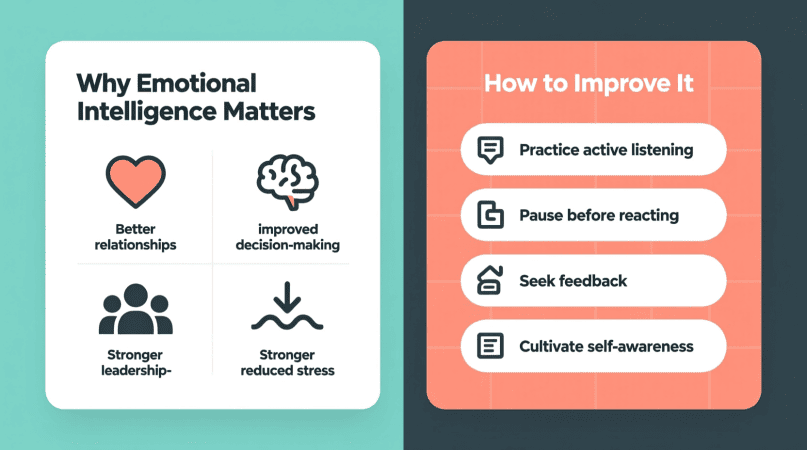
Most people think intelligence is all about IQ. But in real life, what often matters more is emotional intelligence—your ability to notice, understand, and manage emotions in yourself and others.
It shapes how you handle stress, build relationships, and make decisions under pressure. The good news? Unlike IQ, emotional intelligence can grow with practice.
Below are 10 proven, practical ways to improve your emotional intelligence
Notice Your Emotions Before They Take Over
The first step is self-awareness. Pause during the day and ask: “What am I feeling right now, and why?” Journaling these moments can reveal triggers and patterns. The more often you name your emotions, the less they control you.
Practice the “Pause” Technique
When you feel your heart racing or frustration building, pause before reacting. Take a breath, count to five, and then choose your response. This simple delay helps prevent regretful words and builds self-control.
Train Your Empathy Muscles
Empathy is more than being kind. It’s about listening with the intent to understand. Try repeating someone’s main point back to them before replying. It shows respect and strengthens your connection.
Learn Stress Management Habits
Stress lowers emotional intelligence. When you’re overwhelmed, your brain shifts into survival mode. Quick resets like deep breathing, a short walk, or mindfulness practice can calm your nervous system and help you respond thoughtfully.
Build Better Communication Skills
Emotional intelligence thrives on clear expression. Pay attention to tone, body language, and word choice. Replace blame with curiosity—for example:
Instead of “You never listen,” try “Can we find a better way to communicate?”
Learn how emotional maturity develops and why it’s key to better relationships and self-awareness.
Read signs of emotional and mental maturity to recognize your current level and growth areas.
Accept Feedback Without Defensiveness
Feedback is one of the fastest ways to grow. Instead of reacting, pause and say: “Thanks for pointing that out.” Even if you don’t fully agree, there’s usually a kernel of truth you can use to improve.
Strengthen Emotional Regulation With Daily Rituals
Rituals like gratitude journaling, regular exercise, or screen-free evenings give your mind balance. Over time, these practices create a calmer baseline, making it easier to handle challenges without overreacting.
Practice Mindfulness and Reflection
Mindfulness teaches you to observe emotions without judgment. Just five minutes of breathing practice can lower reactivity. Over weeks, you’ll notice greater awareness of your emotional triggers.
Discover ways to become more emotionally grounded in ways to improve your emotional intelligence
Use Real-World Scenarios to Practice
Apply emotional intelligence skills in everyday life:
- In meetings, notice tension and ask a question to ease it.
- In relationships, share feelings without blaming.
- With friends, focus on listening more than speaking.
These real-world reps strengthen your EQ muscles.
- Core EQ concepts are explained in emotional maturity.
- Practical strategies for growth are outlined in ways to improve your emotional intelligence.
- How emotional skills influence thinking is explored in mental age and decision making.
- The relationship between EQ and maturity is discussed in mental age vs emotional age.
- Actionable development steps are provided in the improvement guide.